Everything you build sits on the foundation, and it is the one part of a building you cannot easily fix later. In Sri Lanka, ground conditions change dramatically within a few kilometres — from firm laterite and rock in the hills to soft clay, peat and fill in low-lying areas around Colombo and along the coast. The right foundation starts with knowing what is under your land.
Start with a soil investigation
A geotechnical investigation — boreholes, standard penetration tests and laboratory tests — tells the structural engineer how strong the ground is at different depths and where the water table sits. For a small single-storey house on firm ground, a simple trial pit may be enough. For multi-storey buildings, filled land or anywhere near paddy fields, marshes, rivers or the sea, a proper borehole investigation is essential.
Shallow foundations
Strip footings
Continuous footings under load-bearing walls. Economical for single-storey houses on firm soil.
Pad (isolated) footings
Square or rectangular pads under each column of a reinforced concrete frame. The most common choice for two- and three-storey homes on good ground.
Raft foundations
A reinforced slab under the whole building that spreads the load over a large area. Useful on weaker or variable soils where pads would settle unevenly.
Deep foundations: piles
When good bearing ground is deep below soft layers, the load is carried down by piles.
Bored cast-in-place piles
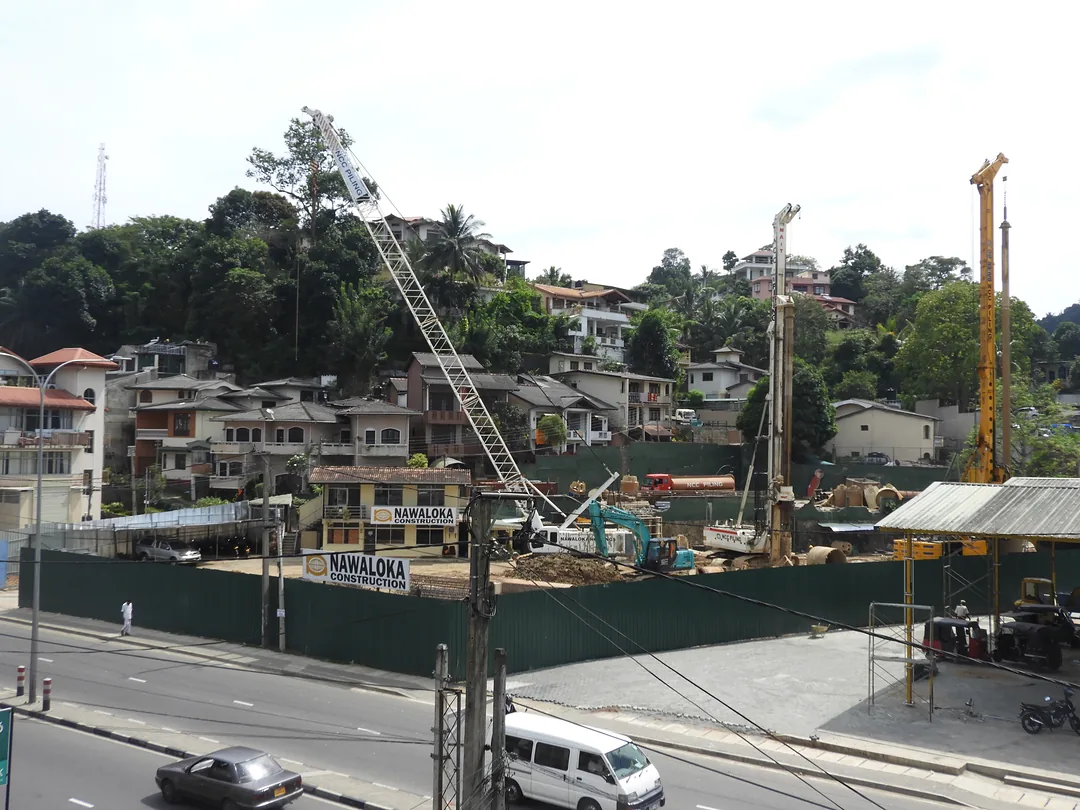
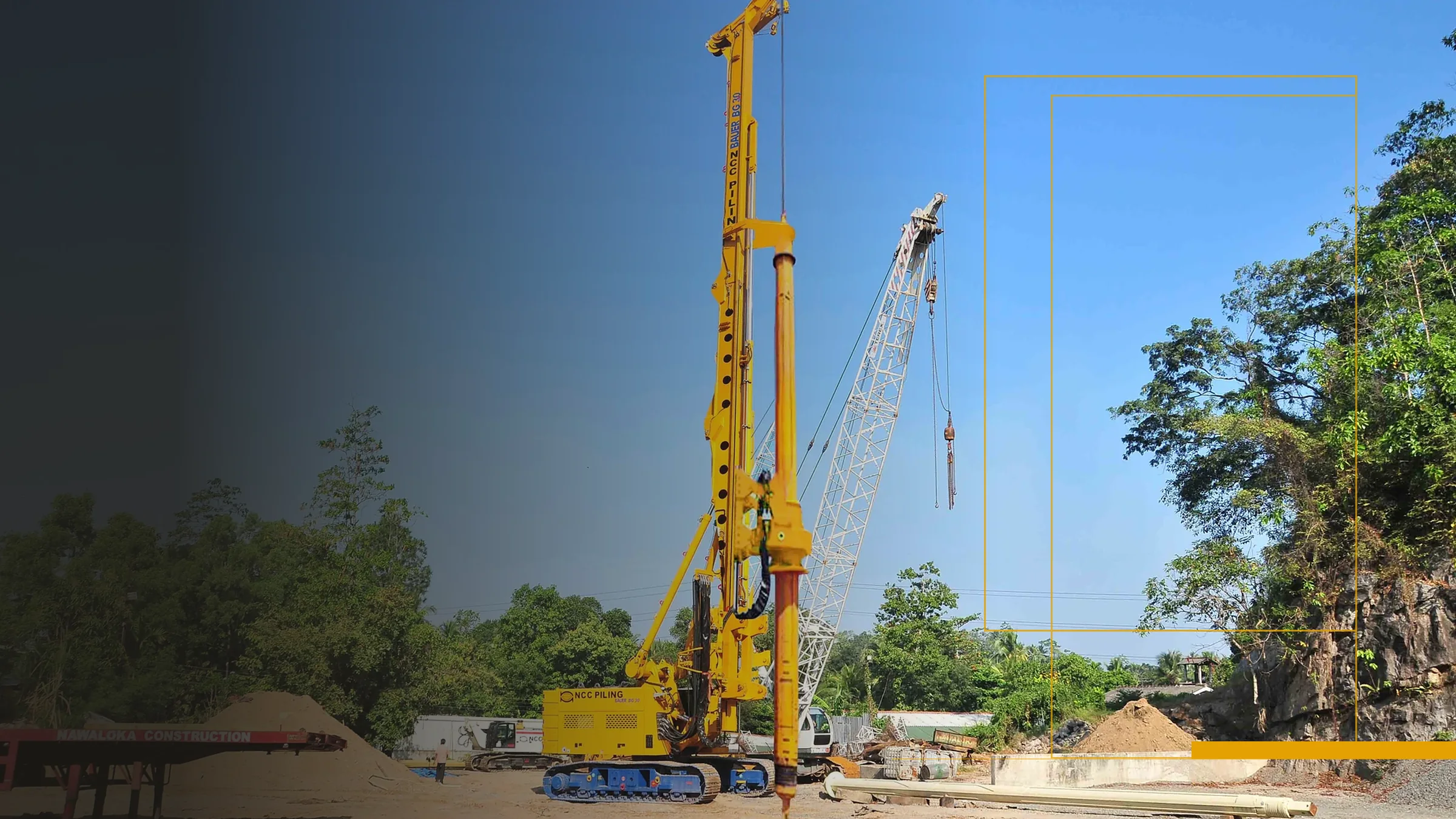
A rotary rig drills a hole, a reinforcement cage is lowered in, and concrete is placed from the bottom up. Bored piles produce little vibration and noise — important in built-up cities — and can reach large diameters and depths for high-rise buildings, bridges and heavy structures.
Driven piles
Precast concrete or steel piles hammered into the ground. Fast, but noisy and vibrating, so less suitable next to existing buildings.
Micro piles and mini piles
Small-diameter piles for restricted sites, extensions and strengthening existing foundations.
Testing and quality
Good piling work includes pile integrity tests and load tests to confirm that piles carry what the design assumes. Ask your engineer which tests are planned and request the results.
Common foundation mistakes
- Designing without a soil test and "adding a bit extra" to be safe.
- Building on fill without compaction or proper foundations.
- Ignoring drainage — water around foundations causes settlement and dampness.
- Mixing foundation types under one building without engineering advice.
Quick answers
Do I need piles for my house?
Most houses on firm ground use pad, strip or raft foundations. Piles are needed when good bearing soil is deep below soft clay, peat or fill — common in low-lying and coastal areas. A soil investigation decides.
What is a bored pile?
A bored cast-in-place pile is formed by drilling a hole with a rotary rig, placing a reinforcement cage and filling it with concrete. It causes little vibration, which suits built-up areas.
Why is a soil investigation important?
It shows the strength of the ground and the water table, so the engineer can choose a safe and economical foundation instead of guessing.
Ready to put numbers to your plans?
Talk to one of our engineers about your project and get a costed quotation.